
The UK pharmacy sector is undergoing significant transformation. Patient expectations are evolving, operational pressures remain high, and pharmacists are increasingly being asked to deliver more clinical services alongside their traditional dispensing responsibilities.
Yet one part of the patient journey remains relatively unchanged: collecting medication.
For many patients, this still means visiting a pharmacy during opening hours, joining a queue and waiting to receive a prescription that has already been prepared and checked.
It's a relatively simple process, but one that can create unnecessary pressure for pharmacy teams and inconvenience for patients.
A recent LinkedIn discussion initiated by healthcare professional Louisa S Conlon raised an important question: why are automated 24/7 prescription collection lockers still relatively uncommon?
Her analysis identified several possible barriers, including funding, implementation costs, patient willingness, medication restrictions and the lack of independent research demonstrating their impact.
These are important questions, and ones the industry needs to address if automated medication collection is to become a meaningful part of modern pharmacy services.
Our experience at Clix, working with pharmacy providers has reinforced something fundamental:
The challenge isn't simply making prescription lockers available. It's making them commercially viable, operationally effective, clinically appropriate and genuinely valuable to the people using them.
1. The opportunity is significant, but adoption remains fragmented
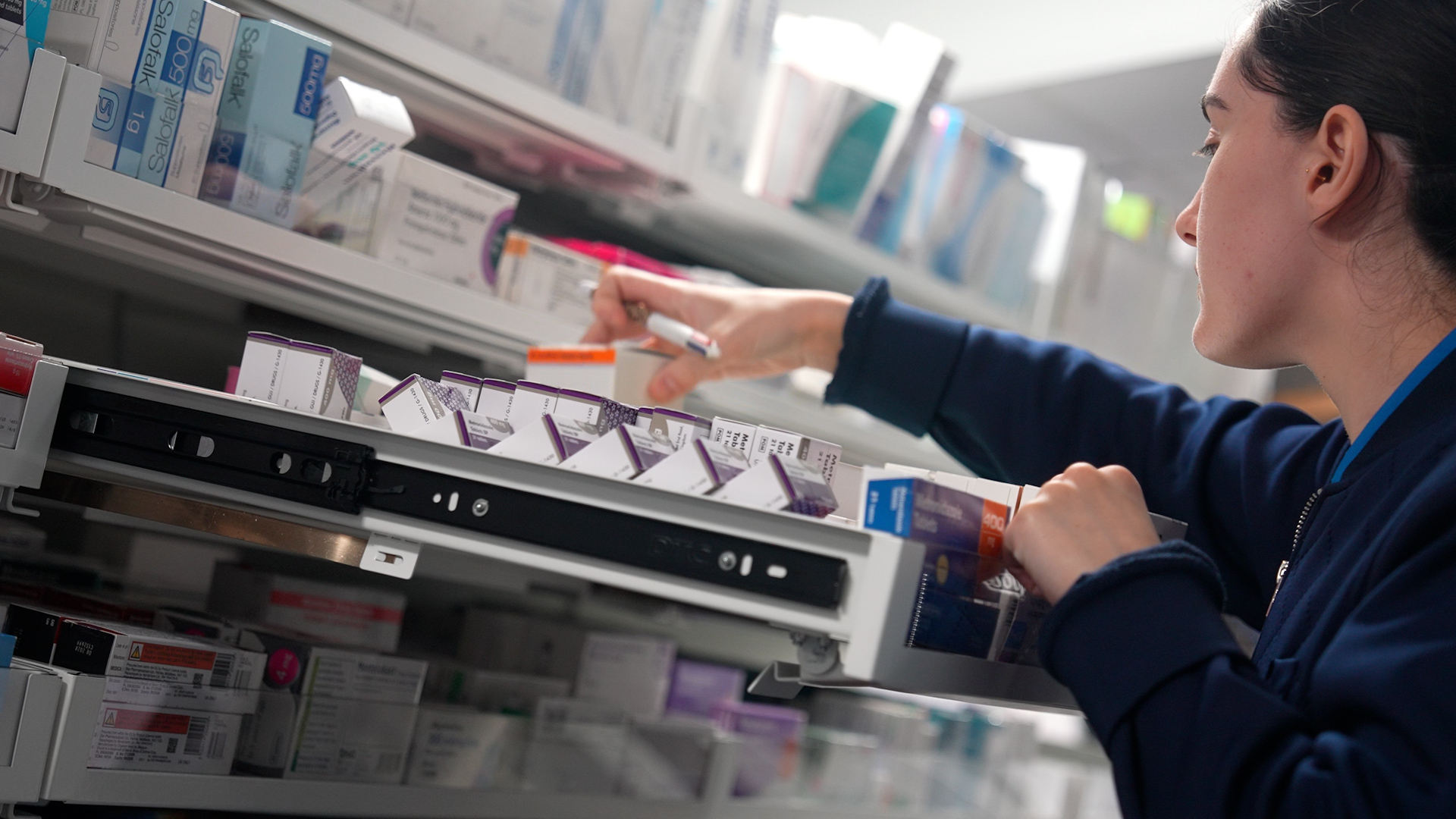
According to NHS Business Services Authority statistics, community pharmacies in England dispensed approximately 1.19 billion prescription items during 2025/26.
Not every item represents a separate collection, and many prescriptions will never be suitable for an automated locker. Nevertheless, the figures demonstrate the scale of medication handling within community pharmacy.
Despite the potential, there is no readily identifiable, comprehensive national dataset showing how many automated prescription collection lockers are operating across the UK, how frequently they are used or what measurable benefits they deliver.
There are encouraging examples.
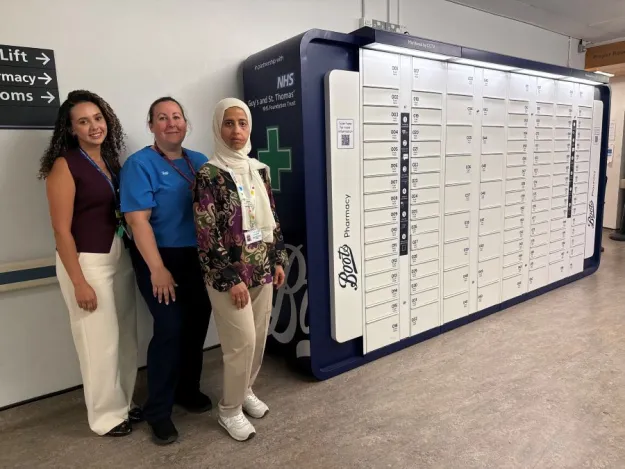
In September 2026, Guy's Hospital announced the introduction of 114 smart prescription lockers, operated by Boots and powered by Clix, allowing eligible patients to collect medication at any time.
Similar Clix-powered services have been introduced at Kingston Hospital, Great Western Hospital in Swindon, Croydon Hospital with Pearl Chemist Group as well as across Berkshire NHS Trusts catchment.
Elsewhere, prescription collection systems have been adopted by community pharmacy groups, with Welsh Government-supported installations demonstrating how public-sector investment can help facilitate implementation.
However, these deployments remain difficult to compare because consistent, publicly available industry-wide performance data is limited.
This represents an important opportunity for pharmacy providers, technology companies and policymakers.
To establish whether automated collection should become more widely adopted, the industry needs to move beyond counting installations and start measuring outcomes.
2. The financial question: who pays, and where is the return?
Perhaps the most immediate obstacle is financial.
A pharmacy might recognise the potential benefits of automated collection without having the capital available to implement it.
Traditional automated prescription collection systems have sometimes required substantial upfront expenditure. In 2019, Boots publicly described the cost of its initial locker installations as being in the tens of thousands of pounds.
For a large hospital or pharmacy group, that investment may be manageable. For an independent community pharmacy already navigating significant financial pressures, it can be a major barrier.
The problem is compounded by uncertainty around the return.
A locker can theoretically reduce counter transactions, improve customer convenience and release staff capacity. But those benefits need to be quantified.
The business case should consider more than the cost of the equipment.
It should account for:
- The proportion of prescriptions suitable for automated collection.
- Current staff time spent locating and handing over completed prescriptions.
- Additional work involved in loading, managing and recovering uncollected medication.
- Patient demand, particularly outside normal opening hours.
- Installation, software, maintenance and support expenditure.
- Potential changes in patient retention, service capacity and pharmacy utilisation.
Crucially, time saved is not necessarily money saved.
Reducing counter activity may create operational capacity without reducing staffing costs. That can still deliver significant value if it allows pharmacy teams to improve service delivery, manage demand or expand clinical activities.
At Clix, we believe the commercial conversation should begin before a locker is specified.
Our approach involves working with pharmacy teams to understand their existing processes, identify where automation could provide tangible value and explore appropriate commercial and funding options.
Purchase and leasing arrangements can also be considered where appropriate, helping organisations evaluate investment against the benefits expected over time.
There is no universal financial model. A high-volume outpatient pharmacy and a small independent pharmacy will have very different economics.
The objective should never be to install technology simply because it is available. It should be to establish a credible business case that supports sustained adoption. “Who can help with this?” you may ask - we can and have done it many times. :)
3. Patient adoption: Is the demand already there?

One of the biggest questions surrounding prescription collection lockers is whether patients actually want to use them.
A 2022 Singapore study, Prescription in Locker Box (PILBOX), surveyed 222 patients and caregivers across two public healthcare centres and found that 40.1% were willing to use an automated medication collection service.
While this provides useful insight, it is important to recognise that the study examined stated willingness within a specific healthcare setting. It cannot be taken as a definitive measure of demand among UK patients.
Interestingly, the study identified ease of use, waiting times and cost as important influences on adoption. This suggests that patients are not necessarily resistant to automation itself, but that the experience needs to be simple, convenient and accessible.
And there are encouraging signs that demand in the UK could be significant.
The public response speaks volumes
The announcement from Guy’s regarding their lockers prompted a particularly interesting response on their Facebook page.
Among the comments were people calling for similar services to be introduced at their own hospitals and local pharmacies across the UK.
This is an important observation. While social media engagement is not a substitute for representative patient research, it provides a valuable indication of public interest in more flexible prescription collection.
People are not simply responding to a new piece of technology. They're recognising a solution to a familiar problem: accessing medication at a time that works around their lives.
For working individuals, parents, carers and people with limited mobility or transport options, traditional pharmacy opening hours can present real challenges. The ability to collect an already-prepared prescription outside those hours could make a meaningful difference.
From patient interest to real-world behaviour
Of course, expressing interest in a service and actually using it are two different things.
That's why operational data from existing installations is so important.
At Kingston Hospital, Clix's published first-month case study found that 15% of collections took place outside normal pharmacy opening hours. This demonstrates that patients were already taking advantage of the extended access offered by the service. This number has grown to almost 50% of all collection tracking taking place out of hours.
As more installations become established, continued analysis of patient behaviour will help determine how demand develops, which groups benefit most and where improvements are needed.
At Clix, our focus is on making that transition from interest to everyday use as straightforward as possible.
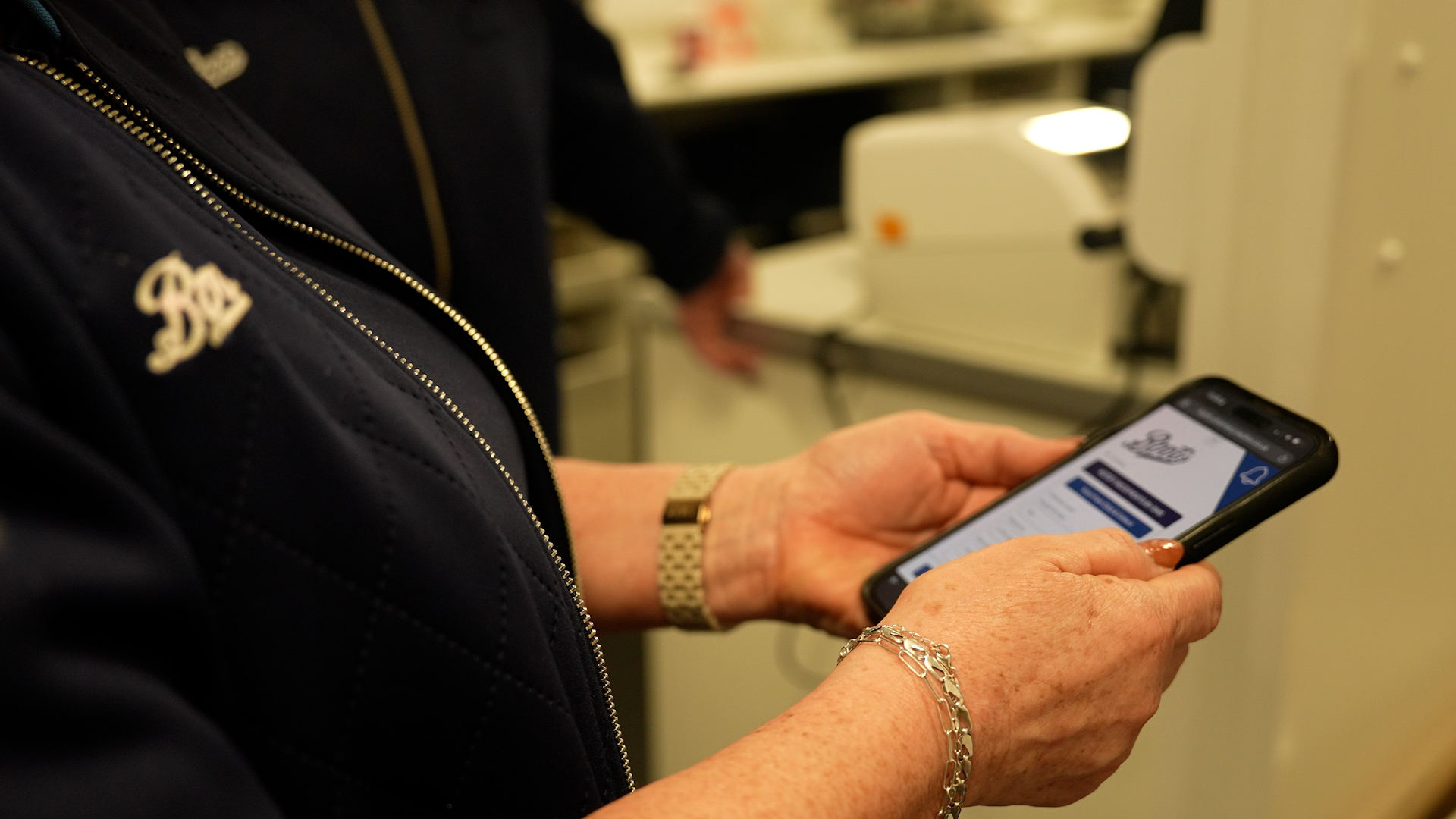
Our systems allow eligible patients to receive a secure collection notification and follow a simple process to retrieve medication that has already been prepared and checked by their pharmacy.
Crucially, automated collection should remain a choice rather than a requirement, with traditional pharmacy collection and access to professional advice available for those who need or prefer it.
The opportunity for pharmacy
For pharmacies considering adoption, the question should not simply be whether patients would use a locker.
It should be how many existing patients could benefit, what barriers currently prevent convenient collection, and how an additional collection channel could improve their experience.
The response to the Guy's Hospital announcement suggests this is a conversation worth having with patients now, rather than waiting for the technology to become commonplace.
Patient adoption will depend on good communication, appropriate service design and an experience that delivers genuine convenience.
But the emerging picture is encouraging: research identifies the conditions that influence willingness, operational data demonstrates real-world use, and public discussion points towards an appetite for wider availability.
The challenge for the industry is increasingly about turning that interest into scalable and sustainable pharmacy services.
4. Does automated collection remove valuable patient interaction?
One of the most important concerns surrounding prescription lockers is the potential loss of face-to-face contact between pharmacists and patients.
It's a legitimate concern.
Pharmacy teams do far more than hand over medication. They provide reassurance, identify problems, explain treatments and offer advice that can materially influence patient safety.
Automation must not undermine those responsibilities.
However, evidence suggests we also need to distinguish between clinically valuable conversations and routine collection transactions.
A 2017 study by Rivers and colleagues surveyed 1,206 people attending 29 community pharmacies in an English city.
Among respondents collecting repeat prescriptions, 25.5% reported receiving unsolicited advice or information.
Among those who actively requested advice, 94% reported receiving it.
These findings do not suggest that counselling is unnecessary. They demonstrate that advice-giving varies considerably across pharmacy encounters.
The purpose of automated collection should therefore not be to eliminate interactions indiscriminately.
It should be to enable pharmacy teams to direct their attention towards patients who need professional support while offering appropriate patients greater flexibility.
That means maintaining clear clinical decision-making processes.
At Clix, our approach is based on pharmacists retaining responsibility for determining whether a prescription is suitable for locker collection.
Where counselling, clarification, additional safeguards or direct interaction are required, the normal pharmacy process should take precedence.
Technology should support that judgement, not replace it.
Patients should also have clear opportunities to ask questions and access professional advice, regardless of how they ultimately collect their medication.
The goal is not less interaction. It's more appropriate interaction, delivered when and where it adds the greatest value.
5. The medication challenge: temperature, security and suitability
A major limitation of many collection locker systems is the range of medications they can safely accommodate.
This is not simply a question of compartment size.
Medication storage introduces requirements involving temperature stability, security, traceability, product suitability and clinical governance.
A solution designed to hold ordinary retail parcels cannot automatically be considered appropriate for medicines.
Temperature management
Temperature is particularly important for external installations.
NHS Specialist Pharmacy Service guidance explains that medicines have differing storage requirements. Although 15–25°C is the preferred environment for general ambient medicine storage, individual products may have different authorised ranges.
This distinction matters.
A temperature-monitored locker provides visibility of storage conditions. It does not necessarily control them.
Similarly, a temperature-controlled system does not automatically guarantee suitability for every refrigerated or temperature-sensitive medicine.
Each application requires appropriate assessment, monitoring, validation and operational procedures.
Clix's T-Series has been developed with differing pharmacy requirements in mind.
Our TM units provide temperature-monitored collection for appropriate medicines, while our TC units introduce temperature-control capabilities for more specialised storage requirements.
We are also continuing development around temperature stabilisation, including specialist thermal inserts and further validation work intended to broaden the range of medicines that can be supported safely.
A key principle of this work is that product suitability must be demonstrated, not assumed.
Controlled drugs
Controlled drugs introduce additional legal, storage, security and record-keeping requirements.
While technology can potentially help address aspects of these challenges, controlled-drug collection must be treated as a distinct compliance and development workstream.
Clix is pursuing further capability in this area, but the necessary technical safeguards and regulatory requirements must be established before any expanded use is represented as compliant.
Security and accountability
The collection process must also protect patient information and ensure that medicines are accessed by the intended recipient or appropriately authorised representative.
Our systems support secure patient verification, role-based staff permissions and time-stamped audit records.
These capabilities help pharmacy teams maintain visibility over collections, investigate incidents and manage access responsibly.
Ultimately, the question is not whether a locker can physically contain a particular medicine.
It is whether the complete collection process can support that medicine's safe and appropriate supply.
6. The overlooked challenge: making lockers work within existing pharmacy operations

This is arguably where many technology adoption programmes succeed or fail.
A pharmacy is already a complex operational environment.
Prescription preparation, clinical checking, stock management, patient communication and collection all need to function together.
Introducing a locker creates another route through that environment.
Unless the workflow is designed carefully, it can introduce additional administration rather than remove it.
For example, staff may need to identify eligible prescriptions, allocate compartments, load medication, handle collection exceptions and retrieve prescriptions that have not been collected.
These tasks must be considered alongside any reduction in counter activity.
A locker that saves time for patients but creates significant additional work for pharmacy staff has not necessarily improved the overall service.
This is why Clix takes a collaborative approach to implementation.
We work with pharmacy teams to understand the existing patient journey and determine where collection technology can integrate effectively.
That includes practical considerations such as:
- Where equipment should be positioned and how patients will access it.
- How staff will load prescriptions without disrupting dispensary activities.
- How patients are notified and supported.
- What happens when a patient cannot access their medication.
- How collections, exceptions and uncollected prescriptions are monitored.
- What staff training, operating procedures and ongoing technical support are required.
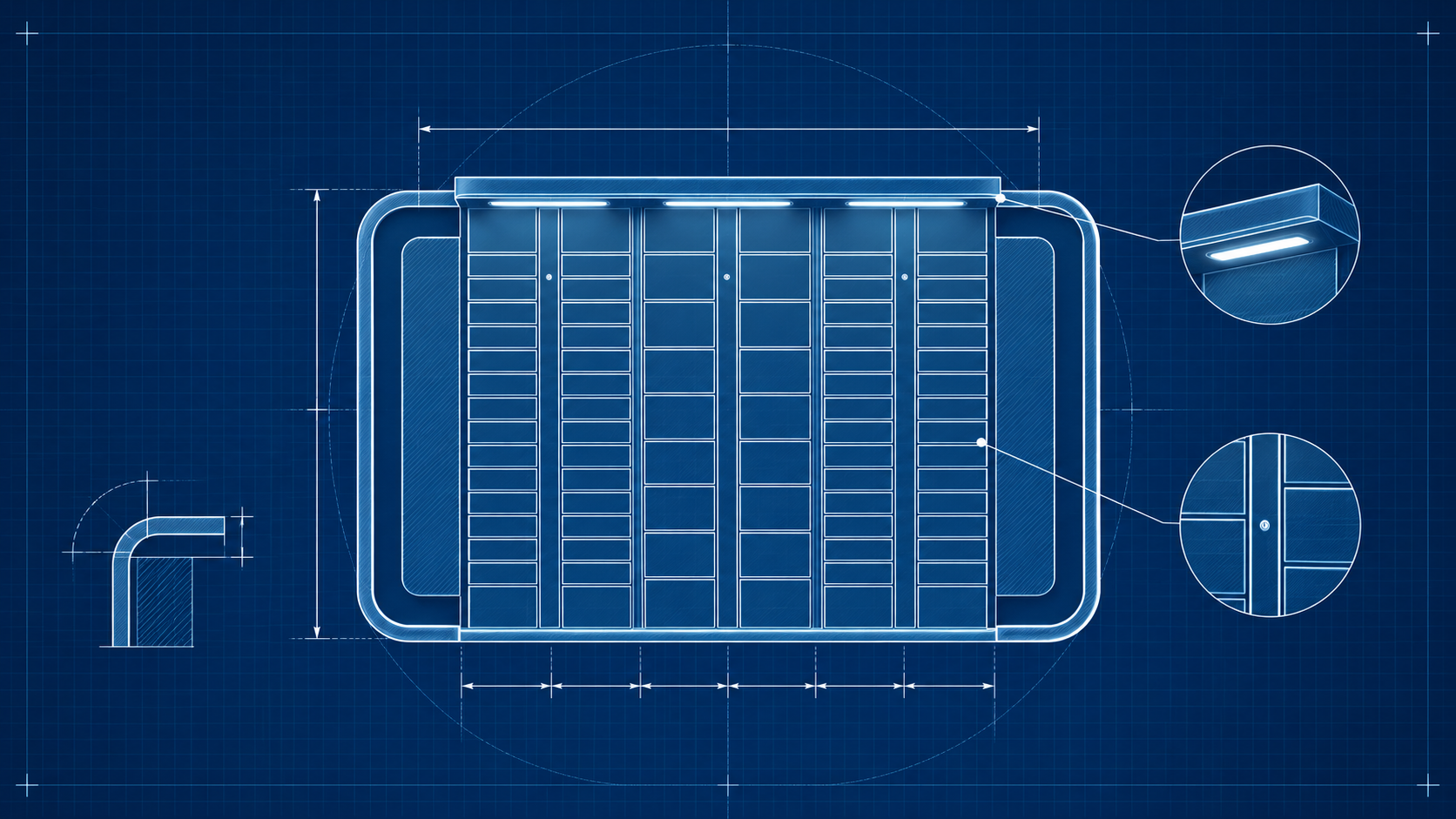
The hardware configuration itself can make a difference.
For example, Clix's dual-sided TDS unit is designed to allow staff to load medication from one side while patients collect from the other.
In suitable environments, this can simplify the handover process and reduce disruption to pharmacy operations.
Our software also provides collection visibility and operational information to help teams manage the service.
However, no single configuration will suit every site.
A hospital outpatient pharmacy might prioritise high-volume collection capacity and patient flow. A smaller community pharmacy may place greater emphasis on limited space, cost and ease of daily operation.
Technology should adapt to the pharmacy's operational requirements, not force the pharmacy to adapt unnecessarily to the technology.
7. Regulation, funding and collaboration: adoption is an ecosystem challenge
Healthcare technology adoption rarely depends on one organisation.
Pharmacy owners, clinical teams, regulators, NHS organisations, estates departments, funding bodies and technology providers may all influence whether a project proceeds.
The NASSS framework, developed by Professor Trisha Greenhalgh and colleagues, provides a useful way to understand this complexity.
It considers seven interconnected areas, including the technology, its value proposition, the people adopting it, the organisations involved, the wider system and how all these elements evolve over time.
Prescription lockers demonstrate why this approach matters.
A pharmacy may have strong demand from patients and a compelling financial case but still face difficulties securing an appropriate location.
Another pharmacy may have an ideal installation site but insufficient resources or operational capacity to support implementation.
These barriers cannot be solved through hardware improvements alone.
They require practical collaboration.
At Clix, we believe providers should take a more active role in helping customers navigate implementation, including early feasibility work, location assessments, commercial considerations, operational design, training and ongoing support.
Regulatory assurance is equally important.
The General Pharmaceutical Council's February 2025 guidance for registered pharmacies providing services at a distance explicitly addresses prescription collection units, including automated collection machines and lockers.
It reinforces expectations relating to risk assessment, safe supply, secure access, communication and effective oversight of third-party providers.
These requirements should be incorporated into deployment planning from the outset.
There is also a wider strategic opportunity.
In England, independent prescribing was introduced into elements of nationally commissioned community pharmacy services in October 2026, building on the expansion of Pharmacy First.
As pharmacies take on broader clinical responsibilities, there is a stronger rationale for examining how routine operational processes can be redesigned to support professional capacity.
Automated collection could form part of that redesign, provided its benefits are demonstrated.
This also creates opportunities for NHS organisations, integrated care boards, pharmacy groups and technology providers to collaborate on targeted pilots and evaluation programmes.
However, funding for wider pharmacy service transformation should not be confused with a dedicated funding entitlement for prescription lockers. The financial and commissioning route must be established for each project.
8. We need better evidence, not simply more installations
One of the strongest points raised in the original discussion concerns the limited availability of independent UK outcome data.
It's a challenge the industry should welcome.
Supplier case studies can provide valuable operational insights, but they are not a substitute for independently designed and evaluated research.
In May 2026, researchers writing in the International Journal of Pharmacy Practice examined the potential of pharmacy vending and collection technologies through six dimensions of healthcare quality: safety, effectiveness, patient-centredness, timeliness, efficiency and equity.
This provides a useful foundation for evaluating automated collection more rigorously.
Clix reckons successful deployment should be assessed against clear and measurable indicators.
For pharmacies, these could include changes in staff handling time, counter congestion, collection completion rates, service availability and operating costs.
For patients, they should include convenience, satisfaction, ease of use, accessibility and access to professional advice.
For clinical governance, there must be appropriate monitoring of collection accuracy, security incidents, temperature excursions and other relevant risks.
Importantly, these measures need to be assessed together.
A high locker utilisation rate is encouraging, but it does not necessarily prove that pharmacy workload has decreased.
Likewise, an increase in out-of-hours collection may demonstrate patient demand without establishing improvements in adherence or wider health outcomes.
Clix is using deployment data and feedback to improve its technology and understand how people interact with the service.
We also recognise the value of wider collaboration with pharmacy providers and independent researchers to establish stronger evidence.
The next stage of industry maturity should be defined by demonstrable benefits, transparent reporting and the willingness to learn from deployments that do not meet expectations.
9. Where the industry goes next
Prescription collection technology presents an opportunity to redesign an important part of the medication journey.
However, its future should not be built on the assumption that every pharmacy needs a locker or that every patient should use one.
The strongest opportunity lies in identifying where automated collection solves a genuine problem.
That might be a hospital pharmacy managing significant outpatient demand, a community pharmacy looking to reduce collection congestion or a provider serving patients who struggle to attend during opening hours.
In each case, the right solution will depend on operational requirements, patient needs, medicine suitability and financial viability.
There are several opportunities for the wider industry to pursue.
More accessible commercial models. Lowering the barriers to adoption through proportionate configurations, flexible purchasing arrangements and credible financial analysis.
Better integration with pharmacy operations. Designing technology and workflows that minimise additional administration and support existing clinical responsibilities.
Broader medication compatibility. Investing in temperature management, validation, security and compliance so that more appropriate medicines can eventually be accommodated safely.
Greater patient inclusion. Ensuring automated collection remains a choice, with accessible alternatives and professional support available when needed.
Stronger collaboration and evidence. Bringing together technology providers, pharmacy organisations, NHS partners and researchers to evaluate what works, where and why.
These are not challenges that one technology provider can solve independently.
But they are challenges that a more collaborative industry can make meaningful progress towards addressing.
Conclusion: the future of pharmacy collection is about more than lockers
The discussion around prescription collection lockers should not simply be about how many are installed or how sophisticated the technology has become.
It should be about whether the service delivers meaningful improvements for pharmacies and the people who depend on them.
Done well, automated collection has the potential to give patients greater flexibility, reduce unnecessary counter activity and support pharmacy teams in making better use of their time.
But these outcomes are not automatic.
They depend on appropriate technology, well-designed workflows, a sustainable business case, robust clinical governance and the willingness of providers to support customers long after installation.
At Clix, our focus is on helping pharmacies bring those elements together.
We see 24/7 medication collection not as a replacement for traditional pharmacy services, but as an additional, complementary capability that can help pharmacies evolve.
The real opportunity isn't to put more lockers outside pharmacies. It's to create a smarter, more accessible medication collection service that works for the whole pharmacy ecosystem.
And the best way to achieve that is through collaboration, evidence and a shared commitment to making pharmacy services better.
References and further reading
- NHSBSA — General Pharmaceutical Services 2025/26
- Greenhalgh et al. (2017) — The NASSS Framework
- Lim et al. (2022) — PILBOX Study
- Rivers et al. (2017) — Advice on Prescription Medicines
- GPhC — Guidance on Pharmacy Services at a Distance, February 2025
- NHS Specialist Pharmacy Service — Ambient Medicine Storage
- Thomas et al. (2026) — Dispensing Quality and Collection Lockers
- Guy's and St Thomas' NHS Foundation Trust — Medicine Collection Lockers
- Clix — Kingston Hospital Case Study
- Community Pharmacy England — Prescribing Within the CPCF
Subscribe to our news for more insights!
You might also like
Stay ahead of the curve with Clix’s latest industry insights, covering retail trends and locker-based solutions shaping the market.
