

Tech is changing how people access pharmacy services. Patients increasingly expect their local services to fit around their lives, while pharmacy teams look for ways to manage growing workloads without compromising safety or quality of care.
The General Pharmaceutical Council’s 2025 guidance, Guidance for registered pharmacies providing pharmacy services at a distance, including on the internet, provides an clear framework for achieving this balance.
Crucially, the guidance recognises secure lockers and automated access points as legitimate ways for people to receive dispensed medicines. It also states that the GPhC supports innovation where patients continue to receive safe, effective and person-centred care. Read the GPhC guidance.
For pharmacies considering 24/7 medication access: Remote access can form part of a safe and effective pharmacy service, provided the right governance, security and operational controls are in place.
That is precisely where Clix can help.
Distance should not mean disconnected
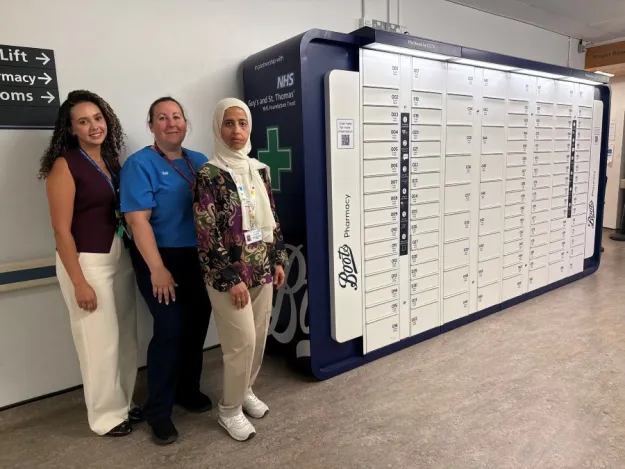
Clix lockers give patients secure, safe and simple access to medication at a convenient time, including outside normal pharmacy opening hours.
The technology does not replace the pharmacist or automate clinical decisions. The pharmacy remains responsible for assessing the prescription, dispensing the medication, providing appropriate advice and deciding whether 24/7 medication access is suitable for the individual.
Clix supports the last mile of the journey, giving pharmacies greater control and visibility than many traditional delivery or access arrangements. But also in a simpler and more reliable way than other tech-based solutions that offer amore vending-machine style functionality.
1. Strengthening governance and accountability
The first principle of the GPhC guidance focuses on governance, including risk assessments, written agreements with third-party providers, regular audits, clear responsibilities and accurate records.
Each distance-based service should be assessed according to its individual circumstances. This includes the location, medicines involved, patient needs, technology, third parties and arrangements for business continuity. Risk assessments should also be reviewed when systems change, incidents occur or the scale of the service increases.
Clix supports these requirements through:
- Auditable records of locker loading and collections.
- Clear visibility of access status and expired prescriptions.
- Defined support, maintenance and service responsibilities.
- Usage and performance information that can contribute to regular audits.
- Risk assessment and implementation support for individual deployments.
- Site surveys covering positioning, physical security, accessibility, connectivity and environmental conditions.
- Operational controls that can be incorporated into the pharmacy’s SOPs.
This provides evidence and controls to support good governance, but responsibility remains with the pharmacy owner and Superintendent Pharmacist. Deployments should therefore be incorporated into the pharmacy’s own risk assessments, SOPs, business continuity plans and audit programme.
2. Supporting confident and competent pharmacy teams
The GPhC expects staff involved in distance-based services to be appropriately trained, including in information security, remote communication and the use of specialist technology.
Clix's VaultOS is designed to keep the pharmacy workflow straightforward. Staff load the dispensed medication, assign it to the intended recipient and allow the system to manage the secure access journey.
Training and implementation support can help teams understand:
- How to load and assign medication correctly.
- How patient access is authenticated.
- How to monitor usage and investigate exceptions.
- What to do if medication is not accessed within the agreed period.
- How to respond to equipment, connectivity or authentication issues.
- When medication should not be placed in a locker.
- How patients can obtain further advice from the pharmacy.
3. Creating a secure physical and digital environment
The guidance requires both the physical environment and any associated digital platform to be safe, secure, accurate and transparent. Pharmacy users should understand which pharmacy is supplying their medication, how their information is used and who they can contact with a question or concern.
Our secure locker infrastructure is paired with a controlled digital journey. The approach of which includes:
- Authentication using patient-specific information.
- Controlled access to the individual compartment containing the medication.
- Secure handling of personal information.
- A strict data-minimisation and same-day data-scrubbing policy.
- NHS Data Security and Protection Toolkit requirements being met.
- Pharmacy-specific communications and access instructions.
Any deployment should also ensure that the pharmacy’s identity, contact details, privacy information and route for obtaining advice are clearly communicated to patients. The locker is an access channel for the pharmacy, not a substitute for the relationship between the pharmacy and the person receiving care.
4. Making access to medicines safer
There is particular emphasis placed on safely supplying medicines at a distance. Its guidance says that medication access units must use secure authentication available only to the correct person. It also expects pharmacies to consider tracking, unexpected interruptions, appropriate packaging, access timescales and the suitability of the medicines involved.
We support pharmacies to address these risks by providing:
- Patient authentication before access.
- A digital record of when medication is loaded and accessed.
- Patient notifications and reminder communications.
- Visibility of medication that has not been accessed so the pharmacy can intervene.
- Configurable access windows and expiry processes.
- Temperature-monitoring to support appropriate storage conditions.
- Alerts and support processes for relevant operational exceptions.
The pharmacy must still decide which medicines and patients are suitable for 24/7 medication access. Refrigerated medication, controlled drugs, medicines requiring additional counselling and other higher-risk supplies should only be included where the pharmacy’s assessment, facilities and procedures support this.
Where temperature-controlled access is required, suitable equipment, packaging, monitoring and escalation arrangements must be used.
5. Providing fit-for-purpose, supportable infrastructure
Under Principle 5, the GPhC expects medication access units and their operating systems to be secure, sufficiently robust, appropriately maintained and capable of being audited. Pharmacies should also understand how failures will be managed and how patients will be informed of disruption.
Clix provides pharmacy-specific infrastructure backed by:
- 24/7 technical support and a four-hour support SLA.
- Remote system monitoring.
- Defined maintenance and escalation processes.
- A five-year hardware warranty and three-year technology warranty.
- Auditable system and usage information.
- Business continuity planning for equipment or connectivity issues.
- Ongoing development focused on system stability and resilience.
These controls help pharmacies demonstrate that any medication access infrastructure is not simply a convenient piece of equipment, but part of a managed and supportable pharmacy service.
Extending access without reducing professional oversight
One thing to note is that the guidance does not suggest that every medicine or every patient is suitable for remote access. Nor does installing a locker automatically make a pharmacy compliant.
What the guidance does make clear is that lockers can support safe pharmacy services at a distance when backed by appropriate governance, secure authentication, patient choice, staff training, auditable processes and reliable equipment.
The Clix system has been designed around these needs. It allows pharmacies to provide 24/7 medication access while keeping the pharmacy team in control of what is supplied, who can access it and how the service is monitored.
For patients, this means more convenient and inclusive access to essential medication. For pharmacy teams, it means fewer queues, fewer missed medication handovers and greater visibility throughout the access journey.
Most importantly, it provides a way to introduce greater convenience without losing sight of the central expectation running throughout the GPhC guidance: pharmacy services must remain safe, effective and person-centred.
Clix does not provide legal or regulatory advice, and use of its technology does not by itself demonstrate compliance. Pharmacy owners and Superintendent Pharmacists should complete their own service- and site-specific assessments and seek professional advice where appropriate.
Subscribe to our news for more insights!
You might also like
Stay ahead of the curve with Clix’s latest industry insights, covering retail trends and locker-based solutions shaping the market.
